Oral film raw-material supplier changes: a comparability checklist
Review a new oral film raw-material supplier through identity, grade, functionality and finished-film evidence. Keep the approved change linked to actual lots and documents.
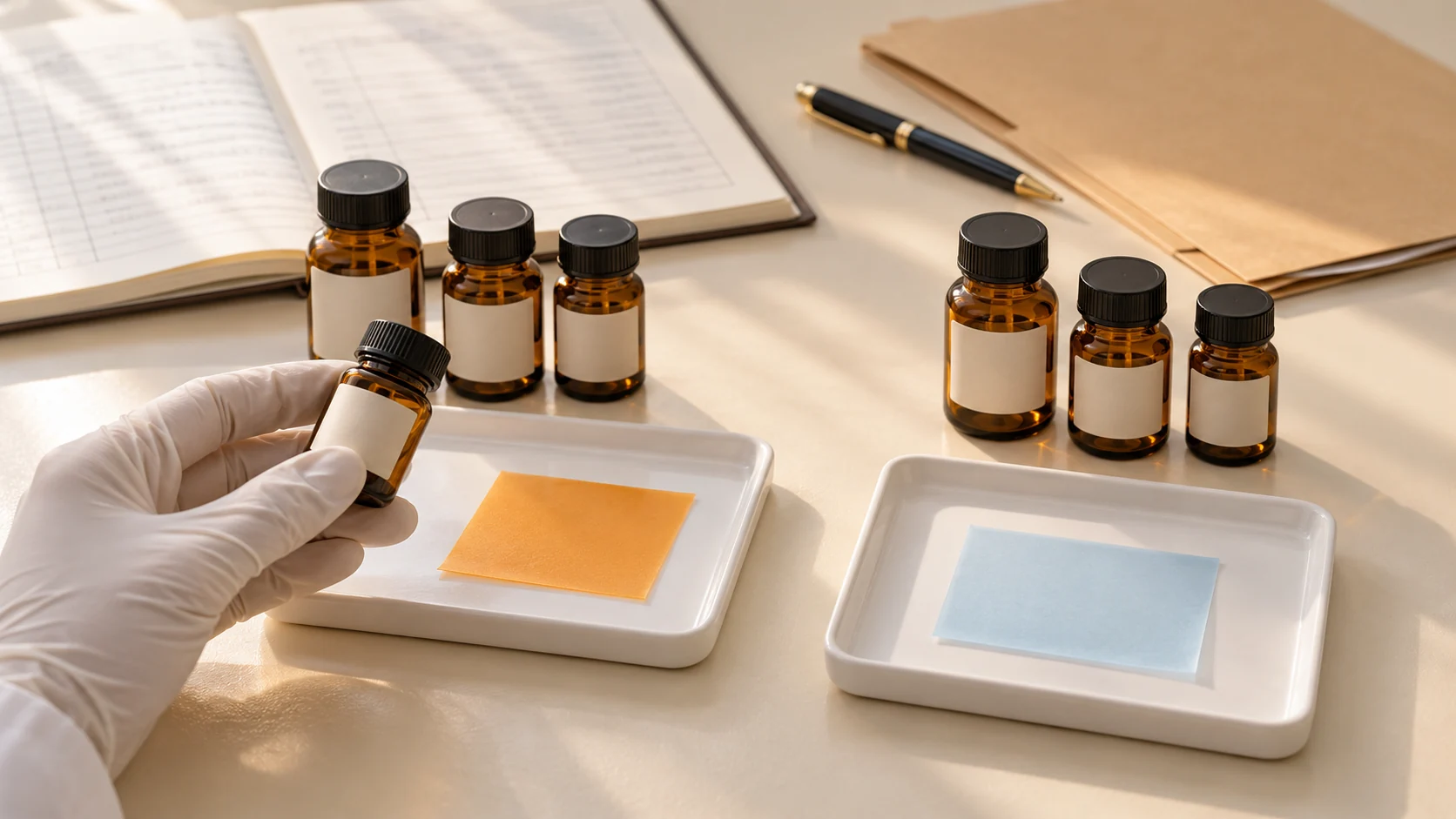
Assess a supplier change against the material and finished-film requirements it could affect. Confirm the actual source and grade, reconcile specifications and methods, then perform the justified comparison before approving identified lots for production.
This is an editorial comparability framework for oral film projects. IPEC and ICH pharmaceutical references inform the discussion; their legal applicability depends on product category and market. No certification or regulatory approval is asserted.
Describe the actual material change
A replacement raw material may arrive under the same ingredient name while changing the manufacturer, production site, grade or supply route. Define which of those elements is changing before comparing prices or accepting a sample. Keep the old approved material and proposed replacement separately identified.
For a film-forming polymer, ask for the exact grade and relevant supplier specification. For an ingredient supplied as a blend or standardized material, record the supplied form and declared composition. A common name or a shared CAS number does not answer every formulation question.
Keep the manufacturer visible behind the distributor
A new distributor and a new manufacturing source are different situations. Record both identities and the proposed route from manufacturer to the oral film facility. If a distributor repacks or relabels the material, include that activity in the traceability discussion rather than treating the distributor’s sales name as the complete source identity.
Reconcile the document package before making films
IPEC Federation’s Significant Change Guide announcement identifies Version 5 (2023) as a framework for evaluating changes involving excipient manufacture and distribution and their notification implications. Its updated qualification-guide announcement identifies Version 3 (2026) and addresses supplier-user relationships. These are pharmaceutical-excipient resources, not evidence that a proposed material is already suitable for a particular oral strip. Change guide; qualification guide.
| Review item | Comparison question | Record needed |
|---|---|---|
| Identity and grade | Is this the same specified material or a proposed alternative? | Manufacturer, site, grade, supplied form and specification |
| Assay and reporting basis | Are the reported quantities directly comparable? | Method, units, as-is or other basis and any stated correction |
| Functional attributes | Which attributes could affect the casting mixture or film? | Relevant grade characteristics and agreed comparison tests |
| Composition and declarations | Have carriers, processing aids or source declarations changed? | Composition information and project-relevant statements |
| Supply and change notification | Who identifies lots and communicates future changes? | Agreed supply route, responsibilities and notification process |
When two certificates use the same test name but different procedures or reporting bases, ask for clarification before calculating a difference. A comparison table should distinguish “equivalent evidence supplied,” “difference explained” and “information still missing.” A blank cell is a task to resolve, not an implicit pass.
Connect each plausible risk to a defined comparison
ICH Q9(R1) describes a science-based approach to quality risk management with effort and formality proportionate to risk. For an oral film change review, use that principle to explain why each comparison is needed. A long list of tests without an identified question can create cost without resolving the material decision. ICH Q9(R1).
For example, if the proposed polymer grade might alter preparation or casting behavior, compare the defined solution or dispersion procedure and the resulting films. If a supplied blend changes its declared ingredient concentration, review the formula calculation and analytical reporting basis. If source declarations matter to a vegan or Halal project, reopen that document review for the proposed material.
Write the question and its decision together
- Could the change affect preparation? Define the comparison of mixing, hydration and casting observations.
- Could it affect film handling? State the conditioning and relevant physical tests.
- Could it affect ingredient measurement? Ask whether the finished-film analytical method remains suitable.
- Could it affect storage behavior? Define the packaging or stability work justified by the change.
- Could it affect project declarations? Identify the statements and documents that need renewed review.
These are proposed review questions. The technical team determines the actual investigation and acceptance criteria. Avoid converting a generic risk score into an automatic approval when a critical identity or documentation gap remains unresolved.
Run a comparison that isolates the proposed change
Use identified old and proposed materials in a justified comparison plan. Keep other variables consistent where practical, including the formula version, ingredient lots, preparation sequence, drying and conditioning. If the trial deliberately changes another variable, record that choice so it can be considered when interpreting the result.
A useful comparison record includes the prepared quantities, material-lot identifiers, sample locations, methods and original results. Photographs can support observations, but they cannot replace an ingredient assay or the required material-identity evidence. Also record negative observations such as tack, difficult peeling, visible particles or packaging interaction when those are relevant to the brief.
Investigate differences before approving the replacement. A change that improves one observation may still affect another requirement. If an additional formulation adjustment is needed, identify it as part of the proposed change and assess the resulting version rather than describing the raw material as a simple interchangeable substitute.
Link physical results to the coating and thickness map and analytical results to the COA review guide. Those links keep the material decision attached to finished-film evidence.
Approve a defined source and follow the first production use
ICH Q10 addresses the control of purchased materials and outsourced activities, including supplier assessment, defined responsibilities and monitoring. It also describes prospective evaluation and follow-up of changes. These pharmaceutical quality-system principles provide context for a documented supplier-change process; they are not a declaration that every oral film project has the same regulatory obligations. ICH Q10, sections 2.7 and 3.2.3.
The approval record should name the accepted manufacturer, site, grade, specification version and relevant supply route. State which lots or implementation point the approval covers. Attach unresolved restrictions and identify who is responsible for communicating the decision to purchasing, production and the customer.
Check the first use against the approved plan and retain any required follow-up evidence. A successful prototype alone does not describe every future lot or eliminate the agreed incoming-material controls. Discuss notification responsibilities in the OEM or ODM scope and connect the material record to batch traceability.
Sources and scope
- IPEC Federation: Significant Change Guide, Version 5 (2023). Public announcement describing the guide purpose and notification context.
- IPEC Federation: Qualification of Excipients Guide and Checklist, Version 3 (2026). Public announcement of the updated pharmaceutical-excipient qualification guide.
- ICH Q9(R1), Quality Risk Management (2023). Science-based risk assessment and proportionality; pharmaceutical scope.
- ICH Q10, Pharmaceutical Quality System (2008), sections 2.7 and 3.2.3. Purchased materials, responsibilities and change management; pharmaceutical scope.
References checked October 30, 2026. The cited research and standards have their own scopes. The proposed review tools are editorial applications, and no endorsement by the cited organizations is implied.
Frequently asked questions
Does a matching ingredient name establish supplier equivalence?
No. Review the actual manufacturer, site, grade, supplied form, specification and relevant functional attributes, then define any finished-film comparison needed for the change.
Can a distributor's certificate replace source identification?
A certificate contributes evidence, but the agreed review should identify the actual manufacturer and supply route, including repacking or relabeling activities where relevant.
Does every supplier change require the same testing?
Define the work according to the plausible effects and the applicable project requirements. Record the justification for the chosen comparisons and resolve critical information gaps.
What should the change approval identify?
Record the accepted source, grade, specification version, implementation point or covered lots, supporting evidence, restrictions and responsible approvers. State the required follow-up.