
Oral Film COA Review: Assay, Content Uniformity and Release Evidence
Read an oral dissolving strip COA by checking batch identity, assay basis, individual-unit evidence and the release decision.
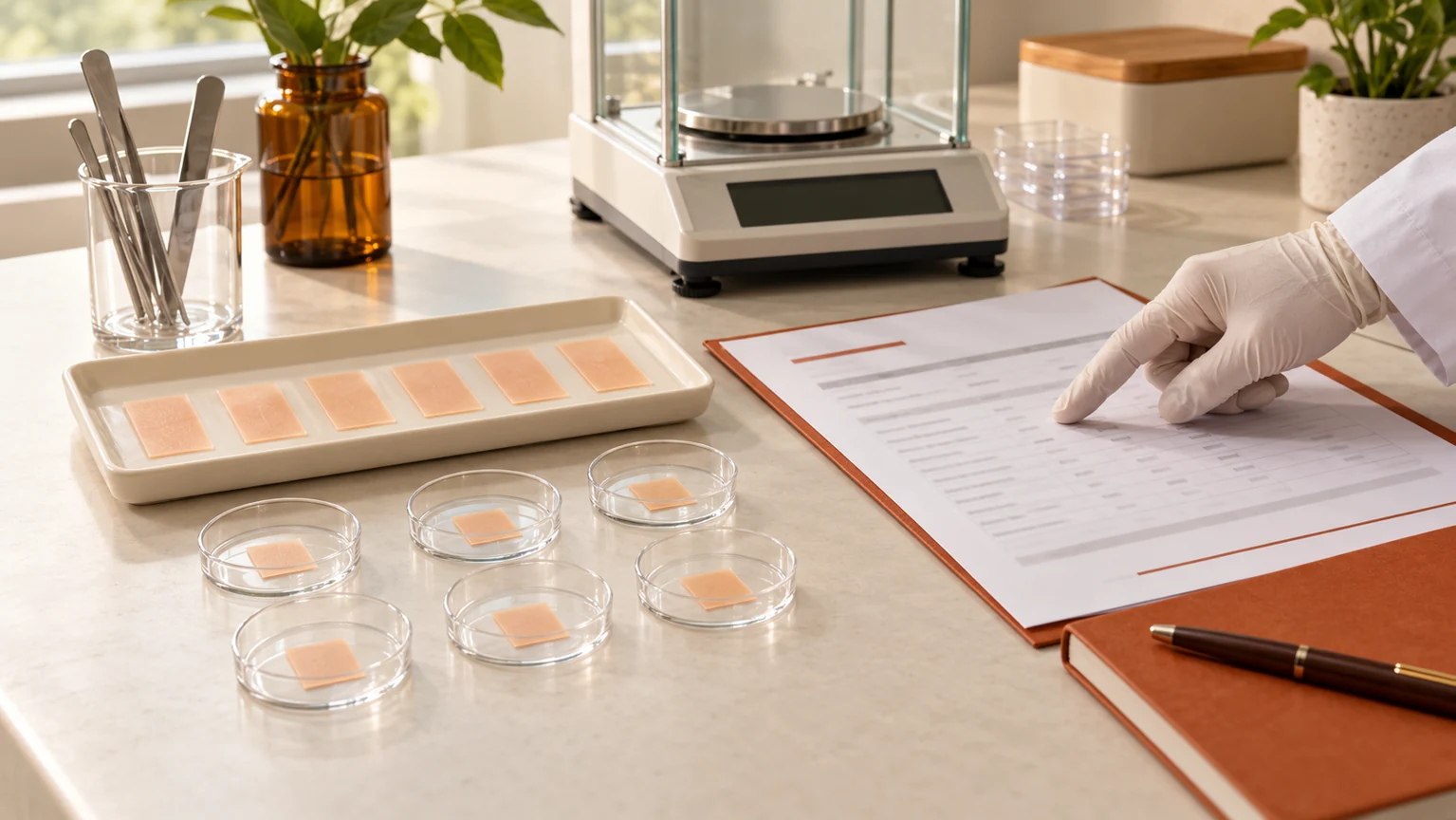
An oral film COA is useful when its batch, specification, methods and results match the product being purchased. Average assay and individual-strip uniformity answer different questions. Request the sampling basis and decision rule before approving a batch.
For brand, procurement and development teams. These checklists are proposed review tools; they do not report testing performed by HYTANBIO or provide personal medical advice.
Identify the material and batch before reading the result
A certificate of analysis (COA) should connect a named material to a traceable batch and an approved specification. For oral dissolving strips, check whether the document covers the incoming ingredient, an unfinished film roll, or the packaged strip. A raw-material COA cannot answer every question about the finished film.
Begin with the product name, formula revision, batch number and laboratory report identifier. Match those details to the purchase order and sample labels. If the film was cut or packed under another batch number, ask for the link between those records. A report without that link may describe a different stage of the project.
FDA’s dietary supplement CGMP guide explains that reliance on a supplier’s component COA involves supplier qualification, methods, limits and actual results. It addresses dietary-ingredient identity testing separately. Those requirements concern the U.S. supplement framework; a drug project needs its own applicable review. FDA: dietary supplement CGMP compliance guide.
Separate average assay from variation between strips
Assay reports how much of the named ingredient the tested sample contains. A composite sample can represent several strips combined for analysis. Content uniformity examines differences between individual units. Ask which sampling design the laboratory used before treating an average as evidence about every sachet.
A hypothetical example shows the limitation. Two units containing 80% and 120% of a target have an average of 100%. The arithmetic gives no reason to accept either unit. These numbers illustrate averaging; they are not acceptance limits, test results or a proposed specification.
USP <905> is the pharmaceutical reference for uniformity of dosage units. A reference to that chapter should identify the applicable edition and procedure. It does not automatically establish a mandatory specification for every nutritional film. USP General Chapter <905>: Uniformity of Dosage Units.
Questions to put beside the assay result
- Were units analyzed separately, or combined? Record the number and origin of the samples.
- Does the quantity refer to one strip, one serving, dry film mass or a percentage of label claim?
- Which ingredient did the method quantify? A total signal may not resolve separate ingredients in a blend.
- Can the laboratory supply individual results and its calculation, where these are agreed deliverables?
Read the method and reporting basis together
| Report item | What it tells you | Follow-up when unclear |
|---|---|---|
| Identity | Whether the specified material was identified | Ask which reference and identification method were used. |
| Assay | Measured amount on the stated basis | Confirm extraction, calculation basis and units. |
| Uniformity | Distribution between sampled units | Request individual-unit data and the agreed decision rule. |
| Water result | Water-related result under a named method | Keep water content, loss on drying and water activity separate. |
| Contaminant results | Results for the named tests and sample | Check method suitability, reporting limits and specification. |
| Release decision | Disposition against the approved specification | Identify who reviewed deviations and authorized release. |
An HPLC chromatogram is one part of an analytical record. The laboratory should explain how it identifies the analyte, prepares the film sample and calculates the amount. Ask about method suitability for the actual matrix, particularly when flavors, colors or several ingredients are present. A method used for a raw material may need a separate assessment for a finished strip.
Interpret “not detected” and “pass” in context
A result reported as “not detected” depends on the method’s detection capability. A result below a quantitation limit is another statement. Request the relevant limit and unit if the result is being used to make a purchasing decision.
For physical film tests, define the endpoint. Thickness, tensile behavior, peelability and disintegration describe different properties. A photograph of a strip disappearing in water gives limited information without the medium, conditions and endpoint definition. None of those observations establishes absorption in people.
Keep unexpected or failing results in the record. Ask for the investigation, any justified repeat work and final disposition. A replacement certificate alone leaves the buyer unable to follow the decision.
Request a release evidence package
- Approved specification and revision, with a method or reference for each test.
- Batch-linked results and agreed individual-unit data.
- Sample selection record, including relevant roll or packing positions.
- Packaging checks, storage instructions and supporting stability references.
- Deviation disposition, release authorization and retained-sample arrangements.
Agree the package before the first purchase order. HYTANBIO projects can define testing within the CRO study scope or CDMO development brief. The quality documentation page explains the separate review of facility credentials.
References and scope
Official documents are linked for their stated scope. Check the edition and destination-market applicability with the responsible laboratory or qualified adviser. No certification or endorsement by these organizations is implied.
Frequently asked questions
Does a 100% average assay prove that every strip contains the target amount?
No. An average can conceal differences between units. Review the individual-unit sampling plan and results required by the agreed specification.
Is a raw-material COA enough to release packaged oral strips?
It describes the tested incoming material. Finished-film processing, unit variation and packaging need the evidence specified for the finished product.
Does USP <905> automatically apply to nutritional oral films?
No universal application is assumed here. Confirm product classification, destination-market requirements and the specification agreed with the laboratory.
What should a result reported as not detected include?
Ask for the method, sample basis, relevant detection or quantitation limit and unit. The phrase alone does not establish an absolute absence.